Why Purpose Matters in Branding for Entrepreneurs
Every purpose-driven entrepreneur knows the struggle of making their brand truly stand out while staying true to their core values. As small creative teams in Central Europe look for genuine ways to build trust and grow sustainably, the search for clarity and meaningful impact often leads to frustration with standard marketing advice. Discover how purpose-driven branding connects your business with real societal change, helping you create lasting relationships that matter to both your team and your customers.
Table of Contents
- Defining Purpose-Driven Branding
- Types of Brand Purpose and Impact
- Key Traits of Effective Purpose Brands
- Purpose in Customer Loyalty and Trust
- Risks of Purpose-Less Branding
- Practical Steps to Purpose Alignment
Key Takeaways
| Point | Details |
|---|---|
| Purpose-Driven Branding | Align core values with societal impact to create deeper connections with stakeholders. |
| Impact First vs Profit First | Understand the distinction between brands focused on social change versus those prioritizing economic growth. |
| Consumer Trust and Loyalty | Build genuine relationships by consistently delivering on social commitments and maintaining transparency. |
| Risks of Purpose-Less Branding | Avoid the strategic vulnerabilities of lacking a clear purpose, which can lead to consumer trust erosion and competitive disadvantage. |
Defining Purpose-Driven Branding
Purpose-driven branding represents a strategic approach where businesses align their core values with meaningful societal impact. Unlike traditional branding focused solely on financial performance, this method creates a deeper connection between a company’s mission and its stakeholders’ values. Purpose-driven brand identity transcends organizational boundaries, focusing on contributing to the common good.
At its core, purpose-driven branding involves three critical elements:
- Authentic social commitment
- Strategic alignment with consumer values
- Transformative potential beyond profit generation
For entrepreneurs, this approach means moving beyond traditional marketing narratives. Brand purpose becomes more than a corporate statement - it transforms into a genuine commitment to creating positive change. Consumer empowerment through brand strategies has emerged as a critical framework for understanding how businesses can meaningfully engage with their audiences.
The strategic implementation of purpose-driven branding requires entrepreneurs to deeply understand their core values and how those connect with broader societal needs. This isn’t about performative gestures, but about creating genuine, sustainable impact that resonates with customers and stakeholders.
Pro tip: Conduct an internal audit of your company’s core values and map them against potential societal contributions to develop an authentic brand purpose.
Types of Brand Purpose and Impact
Entrepreneurs navigating the landscape of purpose-driven branding encounter two primary archetypes: impact first brands and profit first brands. Two major brand purpose approaches reveal distinct strategies for integrating social impact with business objectives, each with unique implications for brand perception and consumer engagement.
The BEING framework offers a comprehensive breakdown of brand purpose principles:
- Beyond Profit: Extending organizational goals beyond financial returns
- Enduring Commitment: Maintaining consistent social responsibility
- Integrated Values: Aligning core business practices with purpose
- Nurturing Stakeholders: Supporting broader community ecosystems
- Genuine Action: Demonstrating tangible, measurable social impact
Impact first brands fundamentally originate to create positive change, with business models inherently designed around solving societal challenges. Conversely, profit first brands approach social impact as a strategic enhancement to their primary economic objectives. Brand purpose principles demonstrate that authenticity matters more than the initial motivation.
Consumer research indicates that the credibility of a brand’s purpose significantly influences purchase decisions and brand loyalty. Impact first brands tend to be perceived as more genuine in their social commitments, which translates into stronger consumer trust and engagement.
Here’s how impact first and profit first brands differ in their approach:
| Attribute | Impact First Brands | Profit First Brands |
|---|---|---|
| Primary Motivation | Societal change | Economic growth |
| Business Model Design | Built for impact | Adds impact to core strategy |
| Consumer Perception | Highly authentic | Sometimes viewed as strategic |
| Engagement Focus | Deep stakeholder connection | Targeted consumer appeal |
| Long-Term Outcomes | Durability through social value | Profit optimization with added value |
Pro tip: Conduct a comprehensive assessment of your brand’s current impact and identify specific, measurable ways to integrate meaningful social contributions into your business model.
Key Traits of Effective Purpose Brands
Purpose-driven brands distinguish themselves through distinctive characteristics that transcend traditional marketing approaches. Authentic consumer empowerment strategies reveal critical traits that separate truly impactful brands from superficial marketing efforts.
Key characteristics of effective purpose brands include:
- Demonstrating consistent commitment beyond financial objectives
- Aligning organizational practices with core social values
- Creating meaningful consumer engagement
- Transparently communicating societal impact
- Maintaining genuine, long-term dedication to social transformation
Brand authenticity emerges as the fundamental differentiator. Purpose-driven brand framework highlights five essential dimensions: operating beyond profit, sustaining enduring commitment, integrating organizational values, nurturing stakeholder relationships, and executing genuine actions.
Successful purpose brands understand that consumers seek deeper connections. They do not simply communicate social impact but actively demonstrate transformation through consistent, measurable actions that align with their proclaimed mission. These brands transform consumer perceptions by showing that business success and societal contribution are not mutually exclusive.
Pro tip: Develop a comprehensive impact measurement framework that quantifies your brand’s social contributions, enabling transparent communication of your purpose-driven initiatives.
Purpose in Customer Loyalty and Trust
Customer loyalty represents far more than repeat purchases - it’s a profound emotional connection between consumers and brands. Consumer trust dynamics reveal that purpose-driven brands create deeper relationships by demonstrating genuine commitment to societal values.
Key components of trust-building through brand purpose include:
- Consistently delivering on promised social commitments
- Transparently communicating organizational values
- Creating meaningful connections beyond transactional interactions
- Demonstrating tangible social impact
- Maintaining authentic, long-term stakeholder relationships
Trust as a loyalty mechanism encompasses multiple psychological dimensions. Consumers do not merely evaluate products, but assess a brand’s broader societal contributions, reliability, and alignment with their personal values. Emotional resonance becomes the critical differentiator between superficial engagement and genuine brand loyalty.

Purpose-driven brands transform traditional customer relationships by showing that business success and social responsibility are complementary. They understand that trust is earned through consistent actions, transparent communication, and demonstrable commitment to creating positive change beyond profit generation.
Pro tip: Develop a transparent impact reporting system that clearly communicates your brand’s social contributions, allowing customers to directly understand and connect with your purpose.
Risks of Purpose-Less Branding
Purposeless branding represents a significant strategic vulnerability for modern entrepreneurs. Strategic risks of inauthentic branding reveal multiple critical challenges that can undermine a company’s long-term sustainability and market positioning.
Key risks of purpose-less branding include:
- Loss of consumer trust and loyalty
- Reduced competitive differentiation
- Vulnerability to market disruption
- Limited emotional connection with customers
- Potential reputational damage
Brand risk management demonstrates that brands without a clear purpose are inherently more vulnerable to negative market perceptions. Consumers increasingly expect businesses to stand for something meaningful beyond profit generation, making authenticity a critical competitive advantage.
Entrepreneurs operating without a defined purpose expose themselves to significant strategic risks. They become interchangeable commodities in a marketplace that rewards meaningful, values-driven brands. Without a compelling narrative that transcends transactional relationships, companies struggle to create lasting connections, attract loyal customers, and differentiate themselves in increasingly crowded markets.
Pro tip: Conduct a comprehensive brand audit to identify and articulate your organization’s core values and potential societal contributions before developing marketing strategies.
Practical Steps to Purpose Alignment
Purpose alignment is a deliberate and strategic process that requires systematic introspection and intentional action. Personal alignment strategies provide entrepreneurs with a structured approach to connecting their core values with their business objectives.
Key steps for purpose alignment include:
- Identify and articulate core personal and professional values
- Develop a clear, compelling purpose statement
- Map current business practices against purpose
- Create measurable impact goals
- Continuously reflect and adapt alignment strategies
Career purpose integration requires entrepreneurs to move beyond theoretical exploration and translate values into concrete, actionable strategies. This involves auditing existing work processes, identifying potential misalignments, and courageously redesigning business models to reflect authentic purpose.
Successful purpose alignment transforms businesses from transactional entities into meaningful platforms for creating positive change. By integrating personal values with professional goals, entrepreneurs can build more resilient, engaging, and impactful enterprises that resonate deeply with both internal teams and external stakeholders.
A summary of practical steps for aligning brand purpose:
| Step | Description | Expected Outcome |
|---|---|---|
| Define Values | Clarify core beliefs | Basis for purpose statement |
| Purpose Mapping | Align actions with mission | Consistent organizational direction |
| Set Impact Goals | Quantifiable targets | Measurable brand progress |
| Review Regularly | Evaluate and refine alignment | Sustained purpose-driven growth |
Pro tip: Schedule quarterly purpose alignment reviews to assess your business’s ongoing commitment to its core mission and make necessary strategic adjustments.
Align Your Brand Purpose with Meaningful Action Today
Entrepreneurs face a critical challenge in defining authentic brand purpose that goes beyond profit and truly resonates with their audience. This article highlights the risks of purposeless branding and the need for genuine, measurable social impact. If you struggle to connect your core values with concrete business strategies or want to build lasting trust and loyalty, you are not alone.
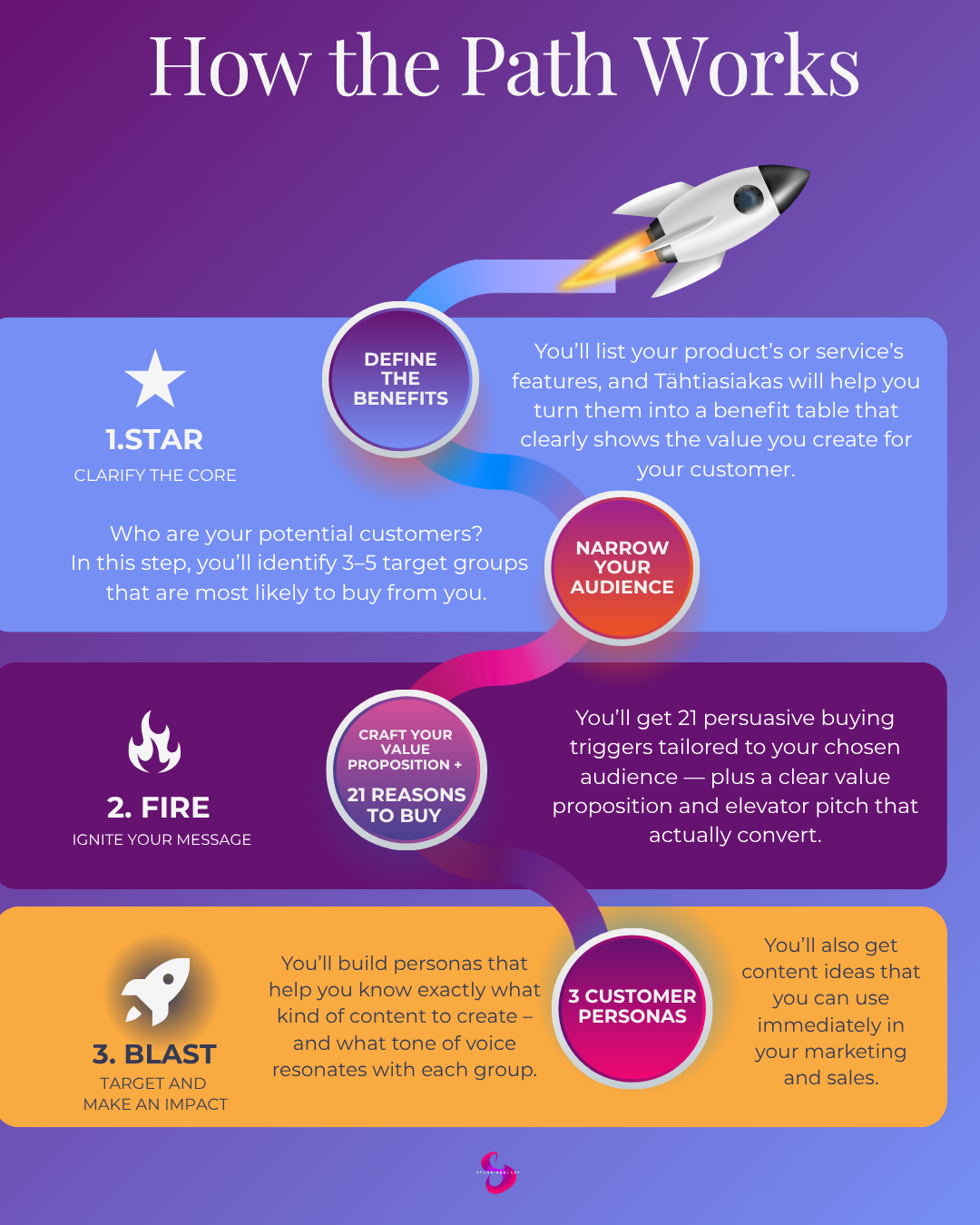
Starfireblast offers a unique platform designed for purpose-driven entrepreneurs ready to clarify who they are building for and why it matters. Our approach combines customer understanding, brand and strategy clarity, and practical AI-assisted tools that help you create real impact without burnout or noise. Discover how to transform your brand from transactional to transformational by integrating your mission with everyday execution.
Start your journey towards authentic purpose-driven branding now. Visit Starfireblast to explore how to deepen your brand’s social commitment, align actions with core values, and engage your community sustainably. Take control of your brand’s future and build a business that thrives on meaning and impact.
Frequently Asked Questions
What is purpose-driven branding?
Purpose-driven branding is a strategic approach where businesses align their core values with meaningful societal impact, creating deeper connections with stakeholders that transcend traditional financial performance.
How do impact first and profit first brands differ?
Impact first brands are designed to create positive change and solve societal challenges, while profit first brands primarily focus on economic growth but incorporate social impact as a strategic enhancement.
Why is brand authenticity important in purpose-driven branding?
Brand authenticity is crucial because it differentiates truly impactful brands from those that engage in superficial marketing. Consumers value genuine commitments to societal change, which strengthens trust and loyalty.
What are some risks of having a purposeless brand?
Key risks include loss of consumer trust, reduced competitive differentiation, limited emotional connection with customers, and potential reputational damage, as consumers increasingly expect brands to stand for meaningful values.