10 growth mindset exercises for entrepreneurs in 2026
Running a business tests your resilience every single day. You face setbacks, unexpected challenges, and moments when self-doubt creeps in. Many entrepreneurs struggle to maintain a growth mindset when pressure mounts and obstacles pile up. The difference between those who thrive and those who burn out often comes down to consistent practice. This article delivers 10 actionable growth mindset exercises specifically designed for entrepreneurs and creators who want to build resilience, adaptability, and sustainable business practices without the fluff or theory.
Table of Contents
- Key takeaways
- How to evaluate growth mindset exercises for entrepreneurs
- 10 practical growth mindset exercises for entrepreneurs
- Comparing growth mindset exercises: a side-by-side summary
- Empower your growth mindset journey with Starfireblast
- Frequently asked questions about growth mindset exercises
Key Takeaways
| Point | Details |
|---|---|
| Practice builds resilience | Regular and consistent growth mindset exercises help entrepreneurs recover quickly from setbacks and stay emotionally steady under pressure. |
| Feedback loops | Proactively seek specific feedback from others and implement at least one improvement within two weeks to accelerate growth. |
| Learning oriented goals | Reframe quarterly targets as learning goals to emphasize skill development and reduce anxiety about uncertain outcomes. |
| Purpose aligned routines | Choose practices that connect to your core values and long term vision to sustain effort and prevent burnout. |
How to evaluate growth mindset exercises for entrepreneurs
Not every growth mindset exercise will fit your situation. You need a framework to assess which practices deserve your limited time and energy. Effective growth mindset exercises must cultivate resilience, adaptability, and align with sustainable business practices.
When evaluating exercises, consider these four critical factors:
-
Resilience under pressure: Does the exercise help you recover faster from setbacks and maintain emotional stability during difficult periods? Entrepreneurs face constant uncertainty, so your chosen exercises must strengthen your ability to handle stress.
-
Adaptability enhancement: Will this practice improve your capacity to pivot when market conditions shift or customer needs evolve? The best exercises train you to see change as opportunity rather than threat.
-
Alignment with purpose: Does the exercise connect to your deeper values and long-term vision? Sustainable growth strategies require exercises that prevent burnout by keeping your work meaningful.
-
Practical integration: Can you realistically incorporate this into your daily or weekly routine without adding overwhelming complexity? Simple, consistent practices beat elaborate systems you abandon after two weeks.
These criteria ensure you invest your energy in exercises that deliver real results. The following section applies this framework to 10 specific practices you can start implementing immediately.
10 practical growth mindset exercises for entrepreneurs
Regularly practicing growth mindset exercises improves entrepreneurial mindset and business sustainability. Here are 10 exercises that meet the evaluation criteria and deliver measurable impact.
1. Daily challenge journaling
Spend 10 minutes each evening reflecting on one challenge you faced and what it taught you. Write down the obstacle, your emotional response, and the specific lesson or skill you gained. This exercise transforms setbacks into data points for growth. Over time, you’ll notice patterns in how you respond to difficulty and identify areas for improvement.
2. Seeking feedback loops
Proactively ask three people each month for specific, constructive feedback on your work, communication style, or decision-making. Frame your request clearly: “What’s one thing I could improve in how I present ideas to potential partners?” Most entrepreneurs avoid feedback because it feels uncomfortable. That discomfort signals exactly where growth happens. Implement at least one piece of feedback within two weeks.
3. Growth-oriented goal setting
Reframe your quarterly goals as learning targets rather than outcome targets. Instead of “Increase revenue by 20%,” try “Master three new customer acquisition strategies.” This shift reduces anxiety about results you can’t fully control and focuses your energy on skill development. You’ll find yourself more motivated because progress becomes visible through learning rather than metrics alone.
4. Perspective shifting
When you encounter a failure or rejection, deliberately spend 15 minutes writing three alternative interpretations of the event. What if this setback is protecting you from a bigger mistake? What if it’s revealing a blind spot in your strategy? This exercise breaks the habit of catastrophizing and trains you to find opportunity in disappointment.

5. Skill micro-practice
Choose one specific skill relevant to your business and practice it for 20 minutes daily for 30 days. This could be cold email writing, video editing, or financial analysis. The key is specificity and consistency. Micro-practice builds competence faster than sporadic effort and proves to yourself that you can master new abilities through focused work.
6. Visualizing success and setbacks
Spend 10 minutes twice weekly mentally simulating both successful outcomes and potential obstacles for your current projects. Imagine yourself handling a difficult client conversation brilliantly, then imagine it going poorly and how you’d recover. This dual visualization prepares your brain for multiple scenarios and reduces the shock of unexpected challenges.
7. Expanding comfort zones
Each week, deliberately do one unfamiliar task that makes you slightly uncomfortable. Reach out to an industry leader you admire, try a new marketing channel, or speak up in a group setting where you usually stay quiet. Small comfort zone expansions compound into significant confidence growth over months.
8. Peer growth mindset groups
Join or create a monthly group of three to five entrepreneurs committed to growth strategies for creators where you share challenges and celebrate learning moments. The structure matters: each person gets 15 minutes to present a current challenge, and the group asks questions rather than giving advice. This builds your capacity to think through problems while feeling supported.
9. Mindful resilience techniques
Practice a five-minute breathing or meditation exercise when you notice stress rising. The goal isn’t to eliminate stress but to create space between stimulus and response. Entrepreneurs who develop this skill make better decisions under pressure because they can pause before reacting. Apps like Insight Timer offer free guided sessions specifically for stress management.
10. Purpose alignment reflection
Once monthly, spend 30 minutes reviewing whether your current projects and priorities align with your core values and long-term vision. Write down what feels aligned and what feels misaligned. This exercise prevents drift and ensures your business remains meaningful as it grows. Leadership skills for innovators include the ability to course-correct before you’re completely off track.
Pro Tip: Most entrepreneurs underestimate the power of seeking feedback loops. This single exercise accelerates growth faster than any other because it gives you information you can’t access alone. Start with people who know your work well and explicitly ask for constructive criticism, not validation.
The table below summarizes these exercises for quick reference:
| Exercise | Primary focus | Time investment | Key benefit |
|---|---|---|---|
| Daily challenge journaling | Resilience | 10 min/day | Transforms setbacks into learning |
| Seeking feedback loops | Adaptability | 2 hours/month | Reveals blind spots |
| Growth-oriented goal setting | Mindset | 1 hour/quarter | Reduces outcome anxiety |
| Perspective shifting | Resilience | 15 min/incident | Breaks catastrophizing habit |
| Skill micro-practice | Capability | 20 min/day | Builds specific competence |
| Visualizing scenarios | Preparation | 20 min/week | Reduces shock of challenges |
| Expanding comfort zones | Confidence | 1 hour/week | Compounds into major growth |
| Peer growth groups | Support | 2 hours/month | Provides accountability |
| Mindful resilience | Stress management | 5 min/as needed | Improves decision quality |
| Purpose alignment | Direction | 30 min/month | Prevents drift from values |
Understanding the role of vision in growth helps you select exercises that align with your long-term direction. Each exercise serves a specific function in your growth mindset development.
Comparing growth mindset exercises: a side-by-side summary
Choosing the right exercises depends on time availability, focus area, and desired impact. This comparison helps you match exercises to your current needs and schedule constraints.
| Exercise | Best for | Difficulty | Impact timeline | Fits busy schedule |
|---|---|---|---|---|
| Daily challenge journaling | Building reflection habit | Low | 2-4 weeks | Yes |
| Seeking feedback loops | Identifying blind spots | Medium | Immediate | Yes |
| Growth-oriented goal setting | Reducing outcome anxiety | Low | 1-3 months | Yes |
| Perspective shifting | Overcoming setbacks | Medium | Immediate | Yes |
| Skill micro-practice | Building specific skills | Medium | 4-8 weeks | Requires commitment |
| Visualizing scenarios | Preparation and confidence | Low | 2-6 weeks | Yes |
| Expanding comfort zones | Building courage | High | 3-6 months | Requires planning |
| Peer growth groups | Accountability and support | Medium | 1-3 months | Requires coordination |
| Mindful resilience | Stress management | Low | Immediate | Yes |
| Purpose alignment | Maintaining direction | Low | Ongoing | Yes |
If you have less than 30 minutes daily, prioritize daily challenge journaling, mindful resilience techniques, and perspective shifting. These deliver quick wins and build momentum. Entrepreneurs with more time should add skill micro-practice and peer growth groups for deeper development.
The difficulty rating reflects how challenging most people find consistent practice, not the complexity of the exercise itself. High difficulty usually means the exercise pushes you significantly outside your comfort zone.
Impact timeline shows when you’ll notice meaningful changes in your mindset and behavior. Immediate impact exercises provide quick feedback that motivates continued practice. Longer timelines require patience but deliver more substantial transformation.
Balancing business priorities means selecting two to four exercises that fit your schedule and address your biggest growth areas. You’ll see better results from consistent practice of a few exercises than sporadic attempts at all ten.
Empower your growth mindset journey with Starfireblast
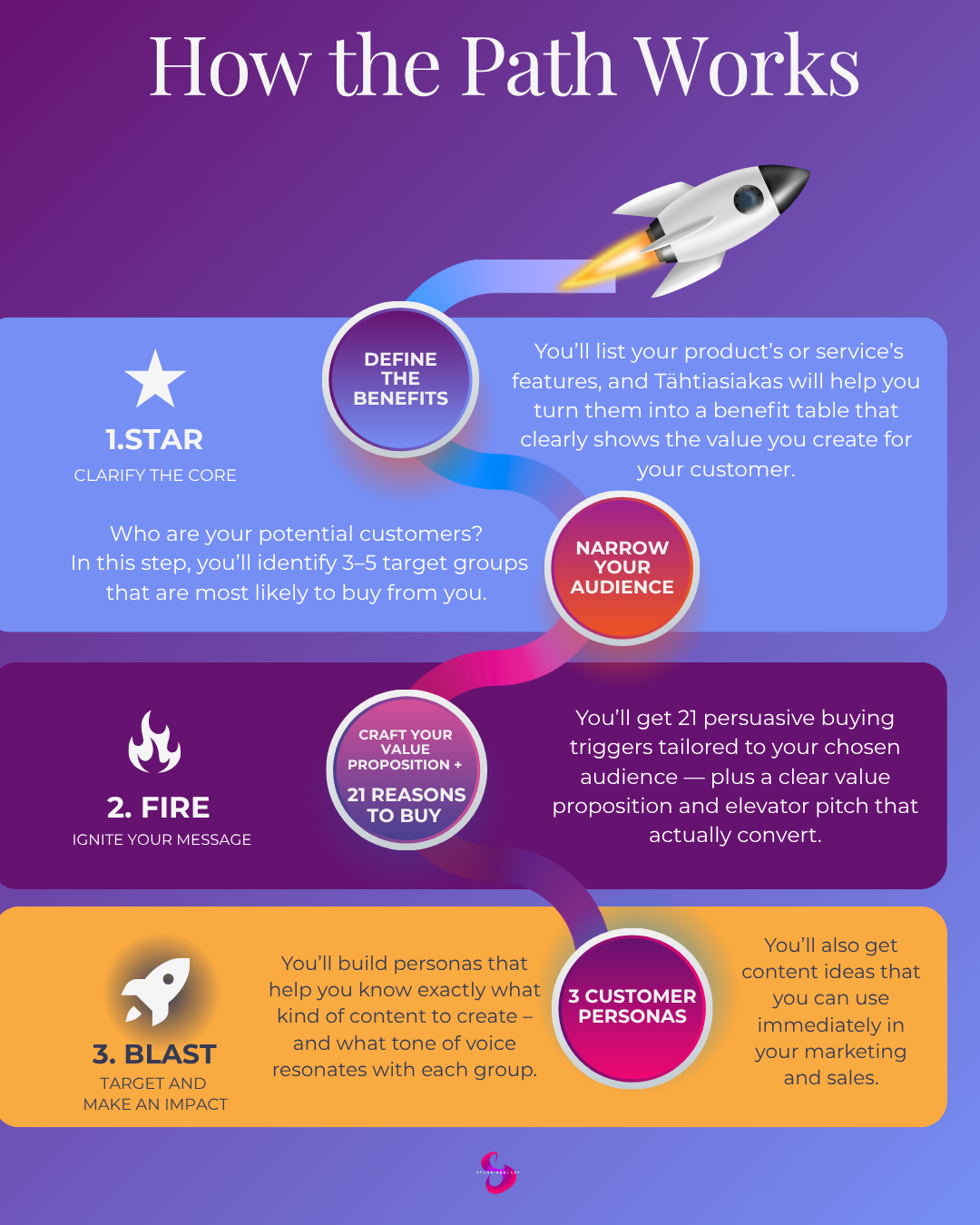
Growth mindset exercises work best when integrated with strategic business clarity. The Customer StarMap™ AI Power Workshop helps you connect personal growth practices with customer understanding and positioning. This workshop guides you through clarifying who you’re building for and why it matters before you scale.
Many entrepreneurs practice growth mindset exercises in isolation without connecting them to their business strategy. The workshop bridges this gap by helping you align your mindset development with sustainable growth strategies that support human well-being, economic viability, and meaningful impact. You’ll learn to integrate reflection, feedback, and purpose alignment directly into your customer research and brand development process. This creates a living, evolving business that grows alongside your personal development rather than demanding you sacrifice one for the other.
Frequently asked questions about growth mindset exercises
What are growth mindset exercises?
Growth mindset exercises are structured practices that train you to view challenges as opportunities for learning rather than threats to avoid. Examples include daily reflection journaling, seeking constructive feedback, and deliberately expanding your comfort zone through unfamiliar tasks.
How do these exercises help entrepreneurs specifically?
Entrepreneurs face constant uncertainty, setbacks, and the need to learn new skills rapidly. These exercises build resilience under pressure, improve adaptability when market conditions shift, and prevent burnout by keeping your work connected to purpose. They transform how you respond to the inevitable difficulties of building a business.
How often should I practice growth mindset exercises?
Start with one daily exercise like challenge journaling and one weekly exercise like comfort zone expansion. Consistency matters more than quantity. After four weeks, add a monthly practice like purpose alignment reflection. Entrepreneur mindset steps emphasize building sustainable habits over intense short-term effort.
What’s the difference between growth and fixed mindset in business?
A fixed mindset views abilities as static, leading you to avoid challenges that might reveal limitations. A growth mindset sees abilities as developable through effort, making you more likely to take calculated risks and learn from failures. In business, this difference determines whether setbacks stop you or fuel your next iteration.
How can busy entrepreneurs integrate these exercises into their schedule?
Start with exercises requiring 10 minutes or less: daily challenge journaling, mindful resilience techniques, and perspective shifting. Schedule them at consistent times like morning coffee or evening wind-down. Once these become automatic, add weekly or monthly practices. The key is treating them as non-negotiable appointments with yourself, not optional activities you’ll do if time permits.