Role of Values in Branding: Impact on Meaningful Connection
Building a brand that truly stands out is about more than a logo or catchy tagline. For many founders across Central Europe, the challenge lies in creating a business identity rooted in genuine beliefs and sustainable values while staying connected to customers and avoiding burnout. By exploring how your brand values shape perception and drive lasting customer loyalty, you will find practical strategies for defining the core of your business and expressing it authentically every day.
Table of Contents
- How Brand Values Define Your Identity
- Types Of Values In Modern Branding
- Influence Of Values On Customer Trust
- Embedding Values In Everyday Business
- Avoiding Pitfalls And Value Misalignment
Key Takeaways
| Point | Details |
|---|---|
| Define Brand Values | Establish core beliefs that guide your organization and differentiate you from competitors. |
| Embed Values in Operations | Integrate values into daily practices, hiring, and decision-making for authenticity. |
| Ensure Value Alignment | Regularly audit organizational actions to maintain consistency with stated values. |
| Build Customer Trust | Foster loyalty by demonstrating transparency and ethical consistency in brand practices. |
How Brand Values Define Your Identity
Your brand values are the fundamental beliefs and principles that define who you are as an organization. Brand identity creates a distinct marketplace presence by communicating what makes your business unique and meaningful.
Brand values go far beyond simple marketing statements. They represent the core philosophical foundation that guides every business decision, interaction, and strategic direction. When authentically developed and consistently applied, these values become the DNA of your organizational identity.
Successful brand values typically share several key characteristics:
- They reflect genuine organizational beliefs
- They are actionable and measurable
- They inspire internal team members
- They resonate with your target audience
- They differentiate you from competitors
Brand identity influences customer perception through consistent expression across all touchpoints. This means your values must be visible in your product design, communication style, customer service approach, and overall business practices.
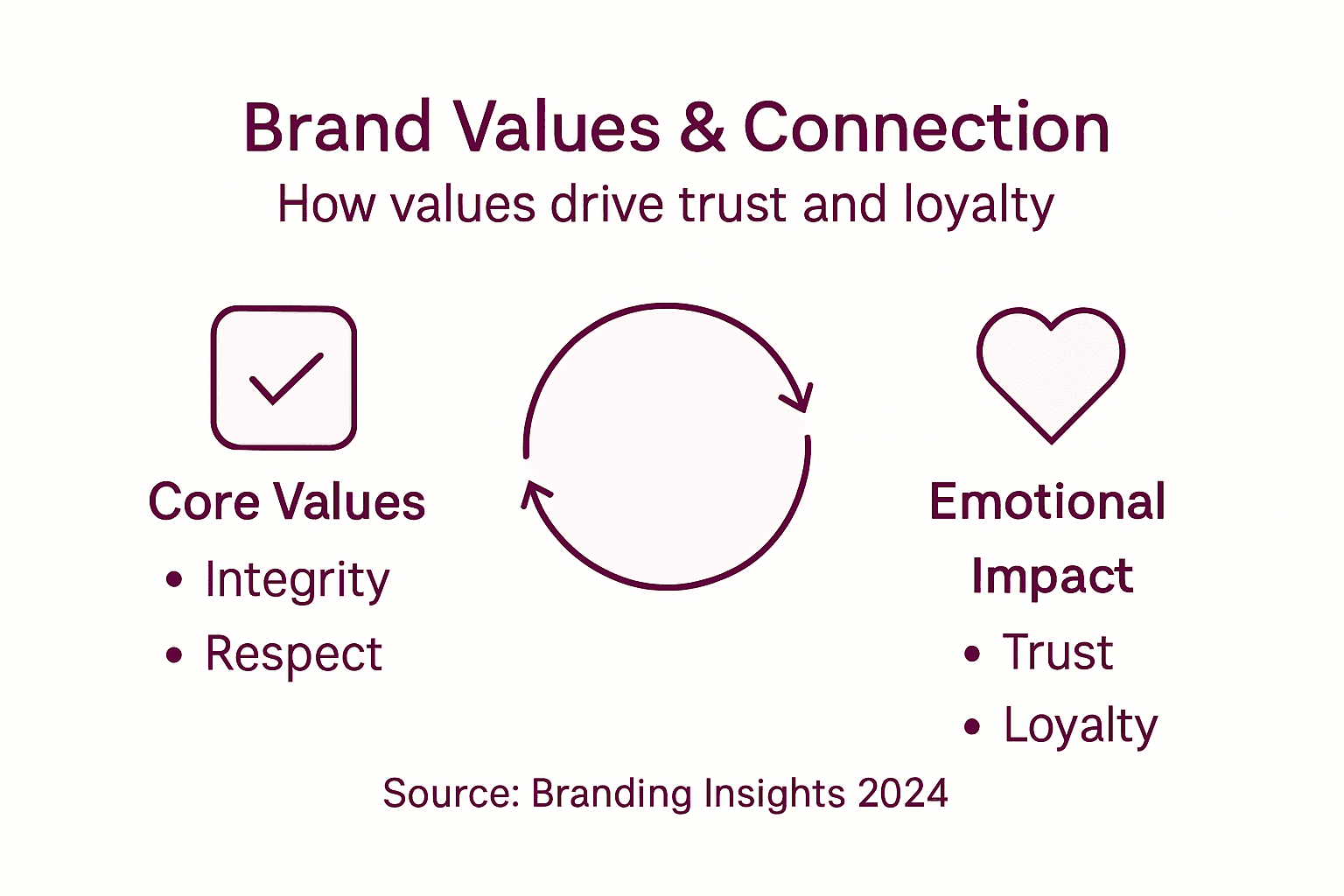
The most powerful brand values create an emotional connection that transforms customers from passive consumers into passionate advocates. They communicate not just what you do, but why you do it - providing deeper meaning and context for your business mission.
Pro tip: Conduct an internal workshop to explicitly define and document your brand values, ensuring every team member understands and can articulate them authentically.
Types of Values in Modern Branding
Brands today are increasingly recognized not just for what they sell, but for the values they represent. Modern branding emphasizes deeper value classifications that go beyond traditional marketing approaches, creating meaningful connections with consumers.
Two primary categories of brand values have emerged in contemporary marketing strategies:
-
Self-Transcending Values:
- Focus on societal and environmental concerns
- Demonstrate commitment to broader community well-being
- Prioritize collective impact over individual gains
-
Self-Enhancement Values:
- Emphasize personal achievement and individual potential
- Highlight opportunities for personal growth
- Showcase individual success and empowerment
Brand values offer functional and symbolic rewards that help consumers express their identity and personal perspectives. These values are not just marketing statements but powerful communication tools that resonate with target audiences on an emotional level.

Here’s how different brand value types impact consumer relationships:
| Value Type | Main Focus | Consumer Impact | Example Outcome |
|---|---|---|---|
| Self-Transcending | Societal and environmental well-being | Builds community loyalty | Increased social advocacy |
| Self-Enhancement | Personal achievement and growth | Fosters individual pride | Higher personal engagement |
Successful brands understand that value communication goes beyond simple messaging. It requires authentic alignment between stated values and actual business practices, creating a transparent and trustworthy relationship with consumers.
Pro tip: Regularly audit your brand’s values to ensure they remain genuine, relevant, and consistently demonstrated across all organizational interactions.
Influence of Values on Customer Trust
Brand trust is the foundational element that transforms casual consumers into loyal advocates. Customer trust significantly enhances perceived value and creates deep emotional connections between brands and their audiences.
Trust is built through consistent demonstration of core values across multiple dimensions:
-
Transparency:
- Open communication about business practices
- Clear explanation of decision-making processes
- Honest reporting of successes and challenges
-
Ethical Consistency:
- Alignment between stated values and actual behaviors
- Demonstrating social and environmental responsibility
- Maintaining integrity in all business interactions
Consumer-brand relationships depend on trust development through ethical practices and genuine value alignment. This means brands must move beyond superficial marketing claims and consistently prove their commitment through tangible actions.
Customers today are sophisticated and can quickly detect inauthentic brand messaging. They seek genuine connections with organizations that demonstrate real commitment to their proclaimed values, making trust a critical competitive advantage in modern business.
Pro tip: Conduct regular external audits and internal assessments to ensure your brand’s actions consistently reflect your stated values and maintain transparent communication with your audience.
Embedding Values in Everyday Business
Organizational values are not just decorative statements, but living principles that must be actively integrated into daily operations. Successfully embedding values requires comprehensive organizational strategies that transform abstract concepts into concrete behaviors.
Effective value integration involves multiple strategic approaches:
-
Leadership Modeling:
- Executives visibly demonstrate core values
- Make value-aligned decisions transparently
- Hold leadership accountable to established principles
-
Systemic Integration:
- Incorporate values into recruitment processes
- Design performance evaluation frameworks around value alignment
- Create reward systems that recognize value-consistent behaviors
Core values serve as competitive organizational advantages by providing a consistent framework for decision-making and cultural development. This means transforming values from abstract statements into actionable guidelines that inform every aspect of business operations.
True value embedding goes beyond documentation. It requires creating an environment where values are so deeply integrated that they become the unconscious default mode of organizational behavior, guiding interactions, strategies, and individual choices.
Pro tip: Develop a quarterly review process that explicitly evaluates how organizational decisions and actions reflect your stated core values.
Summary of strategies for embedding brand values effectively:
| Integration Strategy | Implementation Approach | Business Benefit |
|---|---|---|
| Leadership Modeling | Executives live core values | Boosts trust and culture |
| Systemic Integration | Values in hiring and rewards | Drives consistent behaviors |
| Review Processes | Regular value evaluations | Maintains relevancy and alignment |
Avoiding Pitfalls and Value Misalignment
Brand authenticity requires constant vigilance against potential disconnects between stated values and actual organizational behavior. Branding failures often stem from strategic misalignments that can erode consumer trust and brand credibility.
Common value misalignment risks include:
-
Communication Inconsistencies:
- Mixed messaging across different platforms
- Contradictory statements from leadership
- Superficial value declarations without substantive action
-
Stakeholder Disconnect:
- Ignoring customer and employee perspectives
- Failing to understand evolving societal expectations
- Maintaining rigid organizational perspectives
Brand value misalignment can trigger significant consumer backlash when organizational actions contradict publicly stated principles. This disconnect can create consumer confusion and generate negative perceptions that damage long-term brand reputation.
Successful brands continuously audit their value propositions, ensuring that every organizational action reinforces their core principles. This requires ongoing dialogue, transparent communication, and a genuine commitment to aligning internal practices with external promises.
Pro tip: Conduct biannual stakeholder surveys to assess how well your organization’s actions reflect its stated values and identify potential perception gaps.
Build a Brand That Truly Reflects Your Values and Connects Deeply
The article highlights a critical challenge many entrepreneurs face: bridging the gap between stated brand values and authentic, everyday business actions that create lasting customer trust. You want your brand to stand for something meaningful and inspire passionate advocates without falling into misalignment or superficial messaging. The key lies in clarity, consistency, and genuine connection — not just catchy slogans.
Starfireblast is designed to help you define and embed your brand values with intent. Our platform guides you through clarifying who you are building for and why it matters so you can act on your values before scaling marketing or sales efforts. With tools supporting customer understanding, brand strategy clarity, and community-driven growth, you avoid burnout and superficial noise.
Whether you are a solo entrepreneur or part of a small team looking to build a living, evolving business, Starfireblast helps you make every step value-aligned and purposeful for long-term trust and meaningful connection.
Explore how to clarify your brand and strategy now
Start turning your brand values into actions that build trust and loyalty today. Visit Starfireblast and take the next step toward a truly authentic brand.
Frequently Asked Questions
What are brand values and why are they important?
Brand values are the fundamental beliefs and principles that define an organization. They guide business decisions and contribute to creating a distinct marketplace presence, making the brand meaningful to consumers.
How do brand values influence customer relationships?
Brand values influence customer relationships by establishing trust and emotional connections. When brands align their actions with their stated values, they foster loyalty and transform customers into advocates.
What types of brand values are most effective in modern branding?
The two primary categories of effective brand values in modern branding are self-transcending values, which focus on societal and environmental concerns, and self-enhancement values, which emphasize personal achievement and growth.
How can organizations ensure their brand values remain authentic and impactful?
Organizations can ensure authenticity by conducting regular audits of their values, incorporating them into leadership modeling, and maintaining transparency in communications. Engaging stakeholders for feedback is crucial to recognize areas of misalignment.